
How to Grow Instagram Followers Organically in 2026
Growing Instagram followers organically is not about finding one secret hashtag, posting at one magical time or turning every Reel into a trend.
On this page
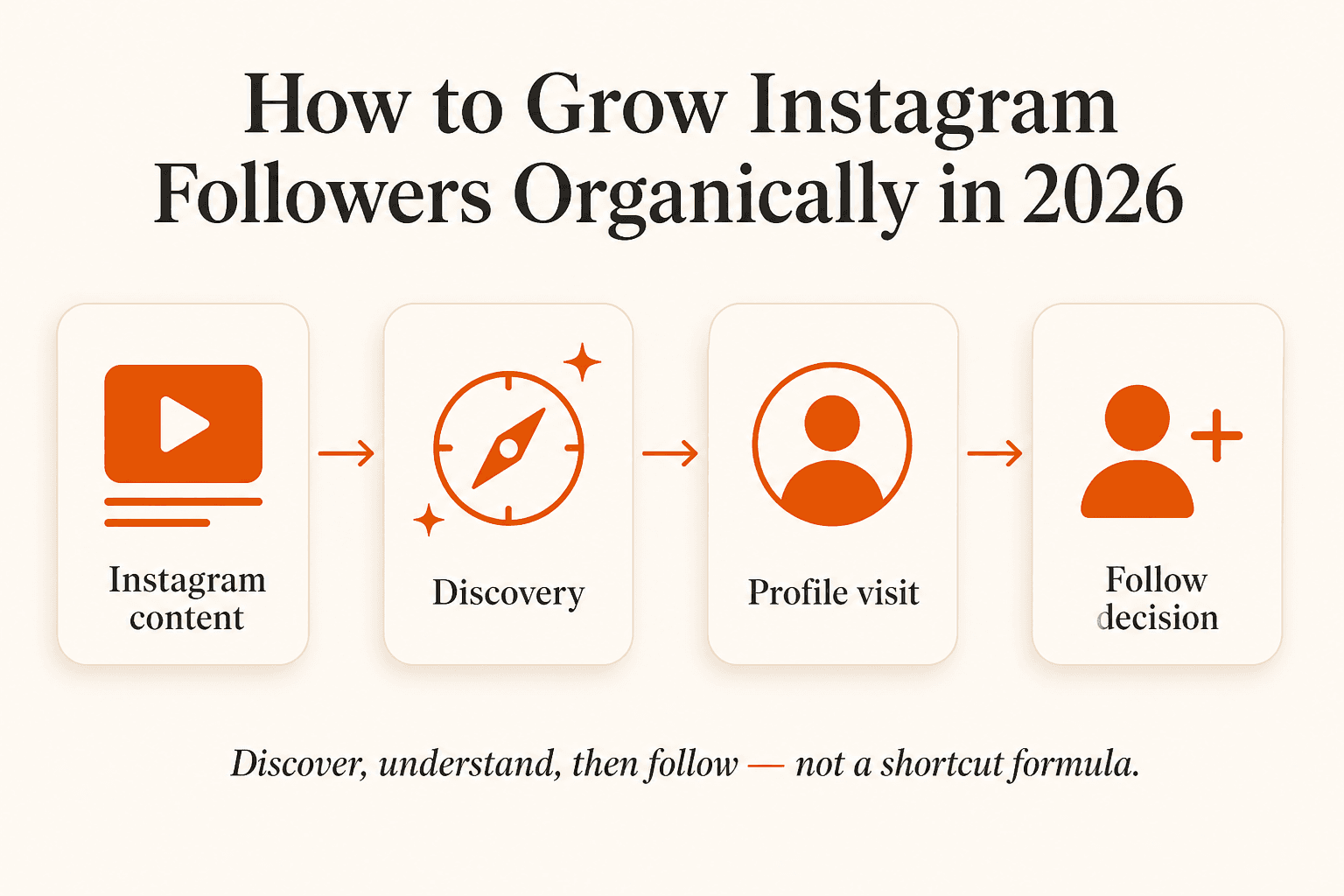
To grow Instagram followers organically, build an account that the right people can discover, understand and want to follow. That means a clear audience, a profile that explains what the account offers, original content around repeatable topics, and regular checks of Insights to see which posts actually bring followers. There is no secret hashtag, magic posting time or universal rule such as 30 Reels equals 10,000 followers.
Instagram's recommendation system can expose eligible public-account content to people who do not already follow the creator through places such as Reels, Explore, Feed Recommendations, Search and Suggested Accounts. But Instagram explicitly says recommendation eligibility does not guarantee that content will actually be recommended. (Instagram Help Center)
The steps below rely on Instagram's own tools rather than growth hacks. Its Professional Dashboard includes a Best Practices education area covering creation, engagement, reach, monetization and guidelines, including personalized advice based on account performance. (Meta Newsroom)
At a glance
- Choose a clear audience
- Make your profile easy to understand
- Create original content around repeatable topics
- Use Reels for discovery when the format suits the idea
- Create content worth finding through Search and Explore
- Measure followers gained and lost
- Compare follower and non-follower performance
- Check recommendation eligibility
- Respond to genuine audience interest
- Create more of the content that attracts the right followers
1. Decide Who You Actually Want to Follow You
“More followers” is not a useful audience definition. A fitness account could serve beginners going to the gym for the first time, runners, busy professionals, people training at home or people mainly interested in nutrition. They all care about fitness, but a beginner may want to know how to use gym machines while an experienced lifter wants to adjust weekly training volume. If you make every post for everyone, the account becomes hard to understand.
Start with one sentence: “This account helps ______ do or understand ______.” For example:
- This account helps first-time home buyers understand property purchases.
- This account helps small businesses understand local SEO.
- This account helps beginner photographers improve smartphone photos.
- This account helps new runners train for their first 5K.
That one sentence can guide your bio, content topics, Reels, carousels, captions and future collaborations.
2. Make Your Profile Explain What Comes Next
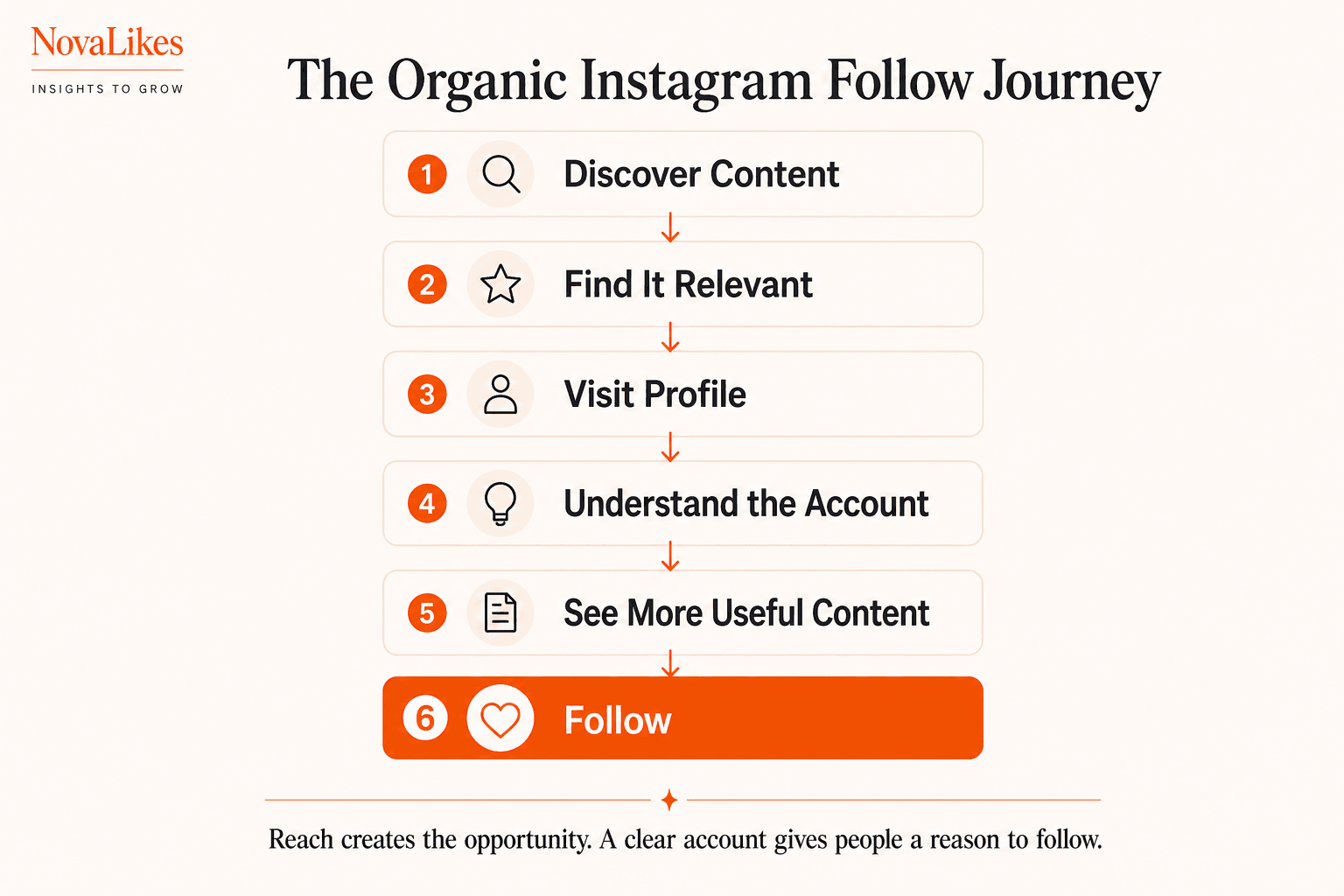
One Reel can bring a profile visit, but the profile has to turn that curiosity into a reason to follow. Someone should be able to look at your name, profile photo, bio, recent posts and pinned posts and quickly understand what the account is about.
Suppose someone finds a Reel called “How to Pace Your First 5K” and opens the profile. If the recent posts cover a beginner training plan, choosing running shoes, stretching after a run and building up to 10K, the account feels coherent. If they find running tips mixed with holiday photos, crypto screenshots, restaurant reviews and motivational quotes, the reason to follow is less obvious. That mix can still work for a personality-led creator, but not for a topic-led account.
Treat the profile like a landing page and ask these questions:
- Does the bio explain the subject?
- Do the recent posts support that promise?
- Would a new visitor understand who this is for?
- Are useful cornerstone posts easy to find?
- Is the profile photo recognizable at small size?
- Is there unnecessary clutter?
Pinned posts help here. Pin your strongest introduction, your best beginner guide or a post explaining what the account covers, rather than the three posts with the largest view counts. The question is which posts best explain why someone should follow.
3. Create Three to Five Repeatable Content Pillars
A content pillar is simply a repeatable category of content. For a beginner running account, the pillars might be:
- Training plans: a first 5K, building weekly distance, rest days.
- Technique: pacing, breathing and running form.
- Gear: shoes, clothing and running in bad weather.
- Recovery: stretching, sleep and common beginner niggles.
- Progress: race-day stories and monthly check-ins.
With pillars in place you can create dozens of useful posts without the account turning random, and followers know what they will keep getting. A recognizable recurring format, such as a weekly “30-Second Photography Fix” or “Before and After Friday,” does the same job. The name matters less than the consistency.
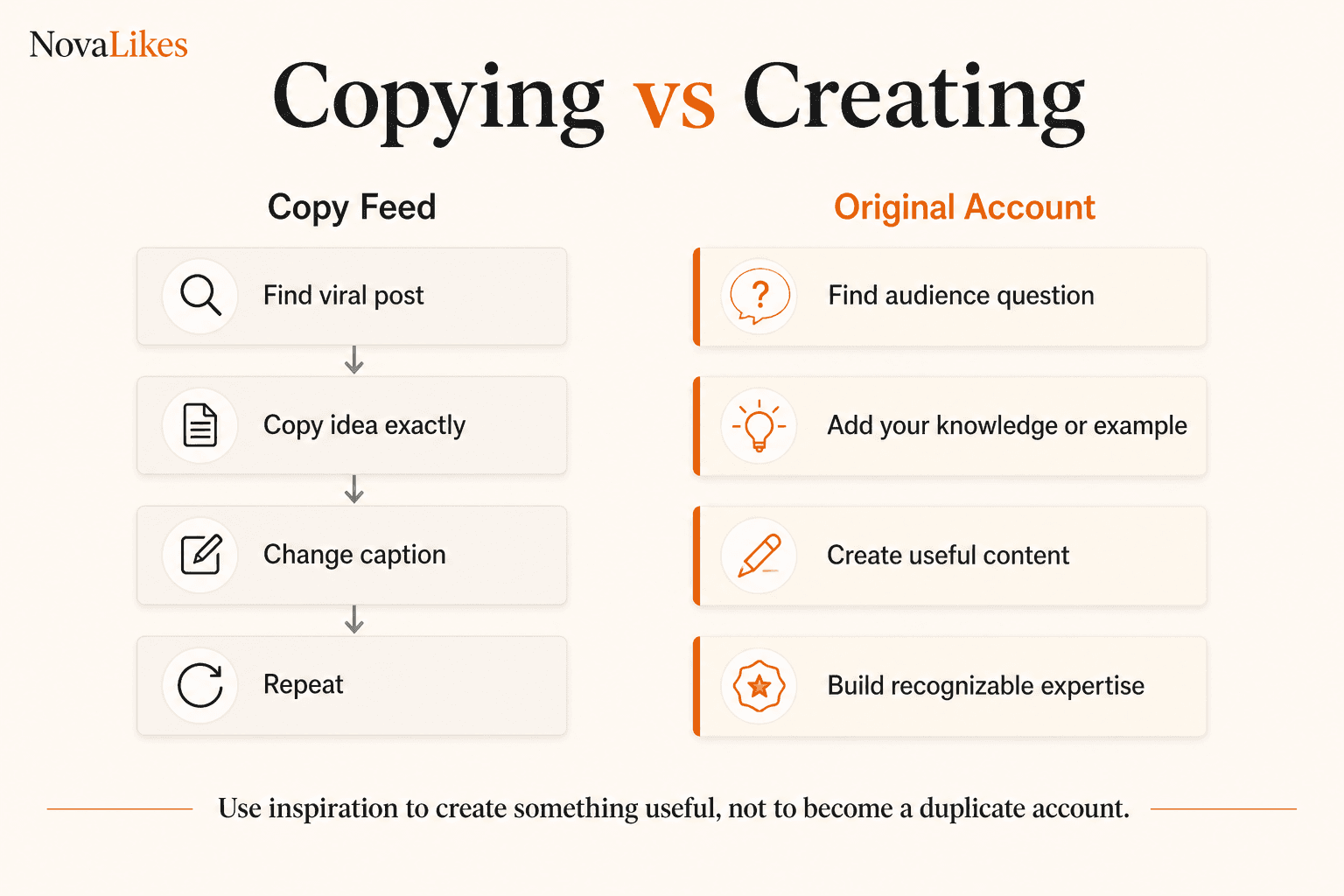
4. Create Original Content, Not a Copy Feed
Meta reported in January 2026 that the prevalence of original content in Instagram recommendations in the US increased by 10 percentage points during Q4 2025, with 75% of recommendations coming from original posts. (Meta Newsroom)
That figure was about US recommendations, and it is not a promise that an original post gets reach, because recommendation still depends on eligibility and personalization. It is still a strong reason not to build a strategy around copying existing material or changing the caption on somebody else's Reel.
“Original” does not mean every Reel needs a production crew. It means the account contributes something of its own: your explanation, experience, analysis, demonstration, photographs, examples, process, opinion or tutorial.
5. Use Reels for Discovery When the Format Fits the Idea
Reels are useful for reaching beyond your current audience, but that does not mean only Reel accounts grow or that photos are dead. Instagram lists Reels among the places where eligible public-account content may be recommended to people who do not follow the creator.
Different parts of Instagram work differently. Instagram has long explained that it does not use one single universal algorithm for every surface; Feed, Stories, Explore and Reels are ranked differently because they serve different purposes. (Instagram blog)
Different users can also have different discovery experiences. Meta said in May 2026 that its Your Algorithm control was available for Reels and Explore in English-speaking countries, allowing users to adjust topics they want to see more or less of, with Feed support planned next. (Meta Newsroom)
Our guide on how the Instagram algorithm works covers those surface differences in more detail.
So pick the format that suits the idea. A demonstration may work well as a Reel, a checklist or step-by-step comparison is often easier as a carousel, and a strong photograph may need no video at all. Stories serve mainly your existing audience, so use them to answer questions, show personality and keep followers interested.
The same applies to trending audio. Use it when it improves the idea and skip it when it does not; a lawyer explaining what happens after a car accident claim does not need to dance because a sound is trending.
6. Make Each Post Clear, Specific and Easy to Find
A Reel can lose a potential follower before the viewer understands what it is about. Compare a weak opening such as “Hey everyone, so today I wanted to talk about something I have been thinking about…” with a clear one: “Training for your first 5K and your shins hurt after every run? Check these three things.” The second names the audience, the problem and the purpose without fake urgency.
Specific topics work the same way. “Running tips” is broad, while “How to pace your first 5K” tells the viewer at once whether the post matters to them. “Smartphone photography” is broad; “How to fix blurry night photos on your phone” is specific. One specific question can also lead to a definition, a comparison, common mistakes, an example and an FAQ.
Describe the subject in natural language in the content, caption and on-screen text instead of stuffing a caption with repeated keywords. That clarity matters because Instagram lists Search among the non-follower discovery surfaces for eligible public content.
Captions can add the context a short video leaves out: details, an example, an answer to a likely question or a pointer to a related post. If a 30-second Reel shows a beginner stretching routine, the caption can list each stretch and how long to hold it.
Use hashtags when they genuinely describe the content. Do not assume 30 hashtags equal more followers, 3 hashtags equal an algorithm boost, or one hidden hashtag killed your account. Instagram's Professional Dashboard Best Practices includes education on hashtags, which is a better guide than outdated universal rules.
7. Build Topic Clusters So One Post Leads to Another
Websites use topic clusters, and Instagram accounts can use the same idea. If a beginner photography account's main topic is smartphone photos, related posts could include:
- How to use portrait mode
- Shooting in low light
- Editing photos in a free app
- Composing with the rule of thirds
- Common mistakes with the phone flash
- Photographing food for a café menu
Someone who finds one useful post then has several related pieces to explore, which makes the profile feel worth following. Not every post needs a “Part 2 in bio” label, but connected content can turn one view into a profile session and give the follow decision more context.
When one post performs well, expand the question instead of repeating it. If “How to Pace Your First 5K” does well, follow up with pacing for 10K, using a running watch and what to do when you start too fast, rather than posting the same Reel 27 times with different background colors.
8. Create Content People Want to Share and Save
A share can introduce your content to someone new. Instead of manufacturing share bait, ask what somebody would naturally send to a friend: a useful checklist, a relatable explanation, a surprising but accurate fact, a helpful comparison, a local recommendation or a clear tutorial. If someone thinks a friend needs to see it, the post has a reason to travel.
Some content is useful later rather than today. A pre-race checklist, a recipe, a workout, a travel itinerary, a template or a tutorial may be saved for future use. Not every post needs a place in someone's saved collection, but save-worthy reference content gives the account depth.
9. Use Comments and Collaborations to Reach the Right People
Comments are audience research. Suppose a Reel about a beginner running plan gets these questions:
- Should I run on consecutive days?
- What if I cannot run for a full minute yet?
- Is treadmill running the same?
- How do I avoid shin pain?
- When should I buy proper running shoes?
That is five possible follow-up posts, and they are stronger than a generic list of 100 viral Instagram ideas because they come from your own audience. Reply where you can add value, then use repeated questions as future content.
With collaborations, the question is whether the other creator's audience could reasonably care about your content, not just how many followers they have. A local restaurant working with a local food creator has obvious overlap, and two small photography creators serving adjacent audiences can make useful content together. A dental clinic paired with a crypto influencer because of a two-million follower count may get attention without useful audience fit.
10. Keep the Account Public and Check Recommendation Eligibility
A private account restricts content to approved followers, so if your goal is reaching non-followers through Reels, Explore and Search, a public account fits that goal. Going public is an access setting, not an algorithm trick, and eligibility does not guarantee that the account or content will be recommended. Instagram's recommendation eligibility system applies to content from public accounts.
Our guide on public vs private Instagram accounts explains this tradeoff in detail.
Instagram says professional accounts can check Account Status to see whether their content may be eligible for recommendations to non-followers. Eligible content may be considered for Reels, Feed, Explore, Search and Suggested Accounts.
One low-performing Reel does not prove a restriction, especially when other posts get normal views and followers keep interacting, so look at several posts and your Insights before drawing a conclusion. If discovery changes sharply, Account Status is more useful than assuming a shadowban, because Instagram lets you review whether account or content issues may lead to feature restrictions or other limitations.
11. Use Instagram Insights to Find What Creates Follows
Insights are available to professional accounts and show more than a headline follower total. Instagram's documentation says follower Insights can include Growth, meaning followers gained or lost, plus follower locations, age ranges and when followers are most active.
Gained and lost tell you far more than the net change. An account that starts the week at 10,000 followers, gains 300 and loses 250 ends at 10,050, and looking only at the plus 50 hides most of what happened. Ask what attracted the 300, why the 250 left, and whether one post or a content shift caused the change. Day-to-day swings such as plus 42, minus 8 and plus 17 are normal, so review weekly and monthly patterns.
A post that mostly reaches existing followers helps retention, while one that reaches many non-followers helps discovery. Neither is automatically better, and a healthy account usually needs both. Instagram Insights can break engagement information down between followers and non-followers on supported content.
Do not judge posts by views alone. In a hypothetical example, Reel A gets 150,000 views and 50 new followers while Reel B gets 35,000 views and 400 new followers. Those are not benchmarks, but they show that the biggest view count does not always produce the strongest follower growth. Instagram's Reel Insights track Views, Accounts reached, Watch time and interactions separately from follower totals.
A large account can publish a weak Reel, and a smaller one can reach many non-followers. Our article on how Instagram Reel views are counted explains those metrics, and the guide to Instagram followers, likes, views and comments shows how each one differs.
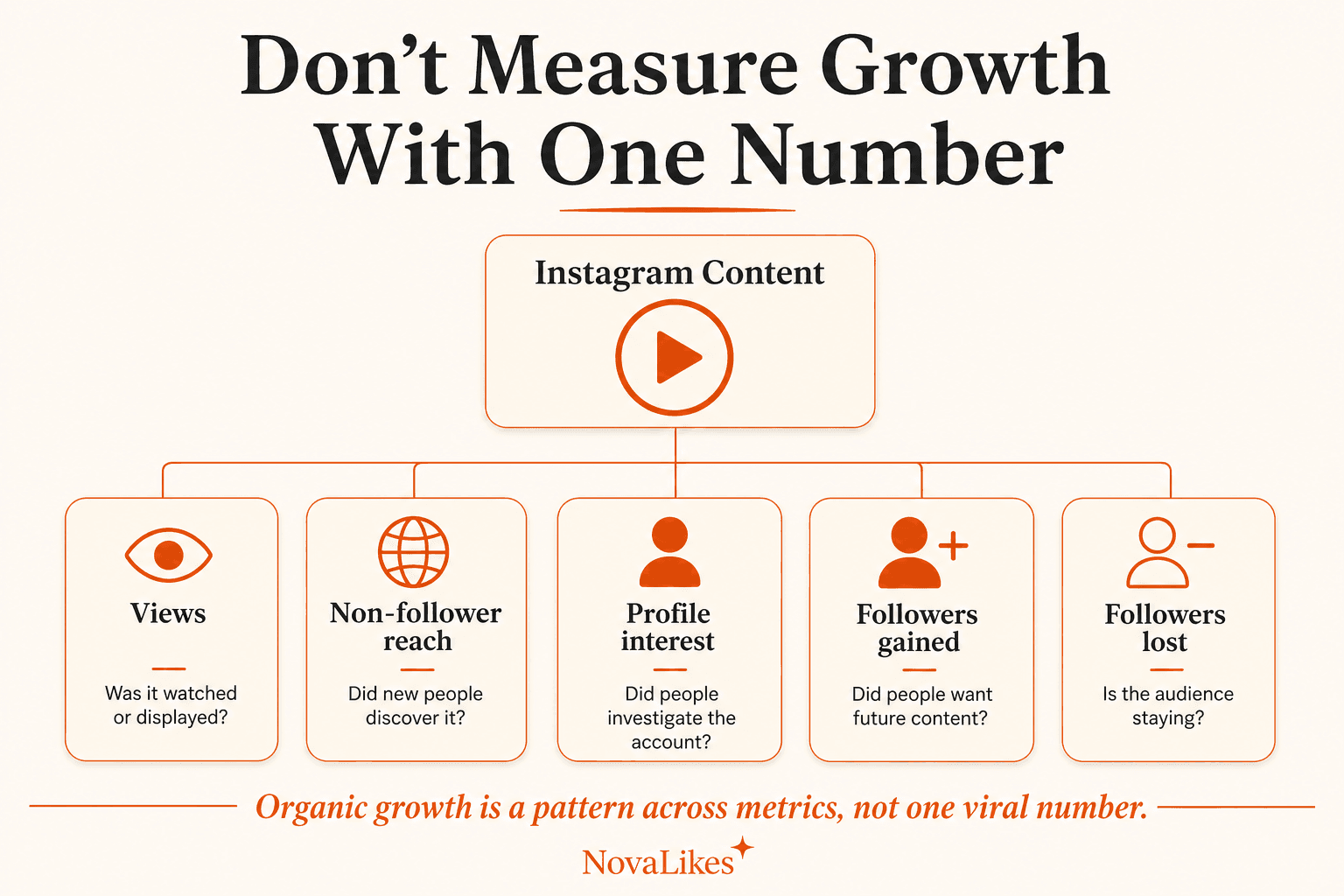
Each month, find the posts that coincided with stronger follower gains and look at their topic, format, opening, audience problem, length and visual style. You may find that tutorials attract more followers than news, that Reels reach more non-followers or that carousels get more saves. Treat that as a pattern worth testing again, not as an algorithm hack that will last forever.
Watch audience fit as well as numbers. If a finance education account posts an unrelated celebrity meme and thousands follow for entertainment, the count grows but later finance posts may get weak interest. If follower losses rise, review content changes, audience mismatch, large temporary growth spikes and whether Instagram removed disabled accounts. Our article on why Instagram followers drop covers this in detail.
Treat the active-times data as a test, not a rule. Posting when followers are active can help content meet the audience, but it cannot rescue irrelevant content. Instagram Insights can show when followers are most active for accounts with the relevant follower data.
How Often Should You Post on Instagram to Grow?
There is no single schedule that fits every creator. Meta says the Best Practices Creation section can cover posting frequency, capturing attention, Reel length, trending audio and hashtags, and the Reach section covers algorithms and the relationship between Reels and follower growth, with personalized tips based on account performance.
Publish often enough to learn and stay useful, but not so often that quality collapses. For one creator that may mean several posts a week, while a complex professional account may do better with fewer, deeper posts. Consistency creates more chances for discovery and more data, but consistent is not the same as constant, so do not publish filler because the calendar says you owe Instagram another Reel.
How Long Does It Take to Grow Instagram Followers Organically?
There is no universal answer. Growth depends on your existing audience, topic demand, content quality, publishing experience, recommendation eligibility, competition, language, location, format and ordinary variation between posts. Be wary of promises such as 1,000 followers in 30 days or 10K in 90 days, because one account's result is not a universal rule. You control what you publish, who it is for and how you improve, not exactly when another person taps Follow.
A Practical 30-Day Plan to Grow Instagram Followers Organically
This is a content framework, not a promise that you will gain a specific number of followers in 30 days.
Week 1: Foundation
- Define your intended audience and choose 3 to 5 content pillars.
- Rewrite the bio for clarity and review recent content.
- Check Account Status and recommendation eligibility if you use a professional account.
- Create several useful pieces around specific audience questions.
Week 2: Discovery
- Publish content that a non-follower can understand immediately.
- Test Reels, a carousel and another format that genuinely suits your subject.
- Make topics obvious and skip trends that do not fit the account.
Week 3: Build on Winners
- Review Insights for followers gained and lost.
- Choose the two strongest topics.
- Create a follow-up, comparison, FAQ and deeper explanation for each.
Week 4: Refine
- Review follower gains, follower losses, non-follower discovery, content performance and recommendation status.
- Check Professional Dashboard Best Practices for current personalized guidance.
- Create next month's plan from your actual data.
You do not need an exact content percentage. Across the month, aim for a mix of discovery posts for new viewers, educational posts that show what the account knows, saveable reference posts, community posts for existing followers, experiments and follow-ups on topics that already attracted relevant interest.
What Should You Avoid When Growing Instagram Followers Organically?
Avoid building your Instagram growth strategy around any of these:
- follow-for-follow
- purchased followers or engagement
- copying viral Reels exactly
- switching niche every week or after a few weak posts
- engagement bait and fake giveaways
- giving third parties your Instagram password
- deleting every low-performing post
- assuming public means guaranteed reach
- fake algorithm formulas
Purchased followers are not organic follower growth. They change the follower count, not how Instagram ranks or recommends your content, and they tell you nothing about which post worked or why people stayed.
Organic growth works as a loop: create, get discovered, attract profile visits, gain some followers, study Insights, learn what attracted them and make stronger related content. The goal is not a bigger number under Followers but an audience that understands why it should keep following.
Frequently asked questions
How can I grow Instagram followers organically in 2026?
Define a clear audience, create original content around topics that audience cares about, use public discovery surfaces such as Reels where appropriate, optimize the profile for clarity, review follower gains and losses in Insights and build more content around patterns that attract relevant followers. Instagram's Professional Dashboard also provides Best Practices and personalized creator guidance.
Do Reels help you gain Instagram followers?
Reels can expose eligible public-account content to non-followers through Instagram recommendations, so they can provide discovery opportunities. However, recommendation eligibility does not guarantee views or follower growth.
How often should I post on Instagram to grow?
There is no universal posting frequency guaranteed to produce followers. Instagram's Professional Dashboard Best Practices includes guidance on posting frequency and can provide personalized recommendations for creators.
Does Instagram prefer original content in 2026?
Meta reported in January 2026 that 75% of Instagram recommendations in the US were coming from original posts after increasing the prevalence of original content in Q4 2025. This does not mean every original post is guaranteed distribution.
How can I tell which Instagram posts gain followers?
Use Instagram Insights to review content performance and follower Growth data, including followers gained and lost. Professional-account Insights also provide information about audience behaviour and individual content performance.
Does making Instagram public increase followers?
Public status makes broader non-follower recommendation eligibility possible, but Instagram explicitly says eligibility does not guarantee recommendation. Public status therefore creates discovery opportunity rather than guaranteed follower growth.
Does buying Instagram followers improve organic reach?
No. Bought followers change the follower count, not how Instagram ranks or recommends your content. Organic reach still depends on how people respond to your posts.
Related services
Related guides
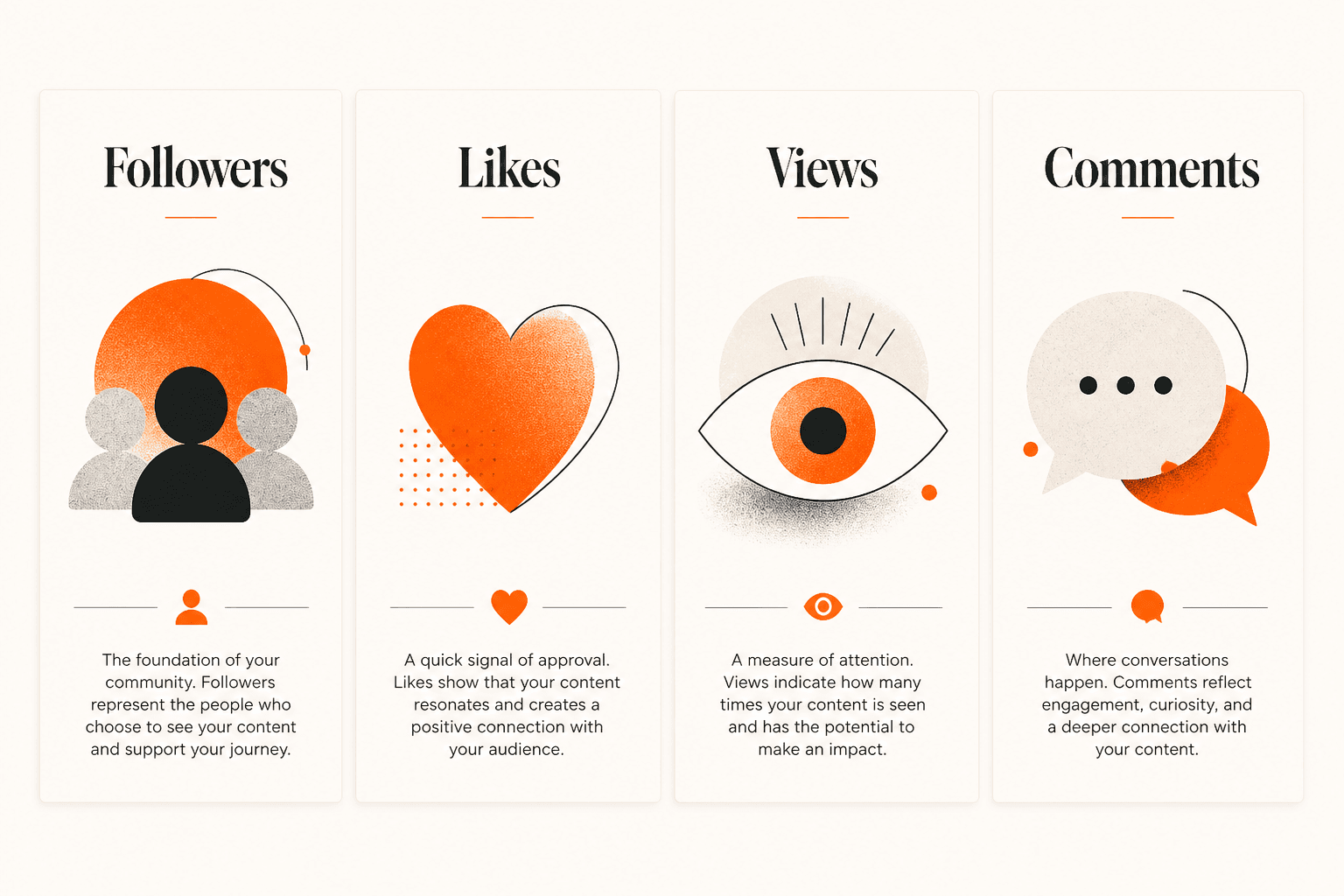
Instagram Followers vs Likes vs Views vs Comments: What Each Metric Means
Instagram followers, likes, views and comments each measure something different. Here is what every number means, why they rarely move together, and how to read them as a set.

How the Instagram Algorithm Works in 2026: Feed, Reels, Explore & Stories
Instagram ranks Feed, Stories, Explore and Reels with separate systems. Here is what each one looks at, why originality matters more in 2026, and what creators can actually control.
Why Do Instagram Followers Drop? Common Reasons Explained
Instagram followers drop because people unfollow, Instagram removes disabled and spam accounts, or a viral spike settles down. Here is how to find the cause and what to do next.
Explore Instagram Services
Compare the available NovaLikes options for Instagram followers.